The SEC’s Long Memory: Cleaning Up the FTX Biohazard
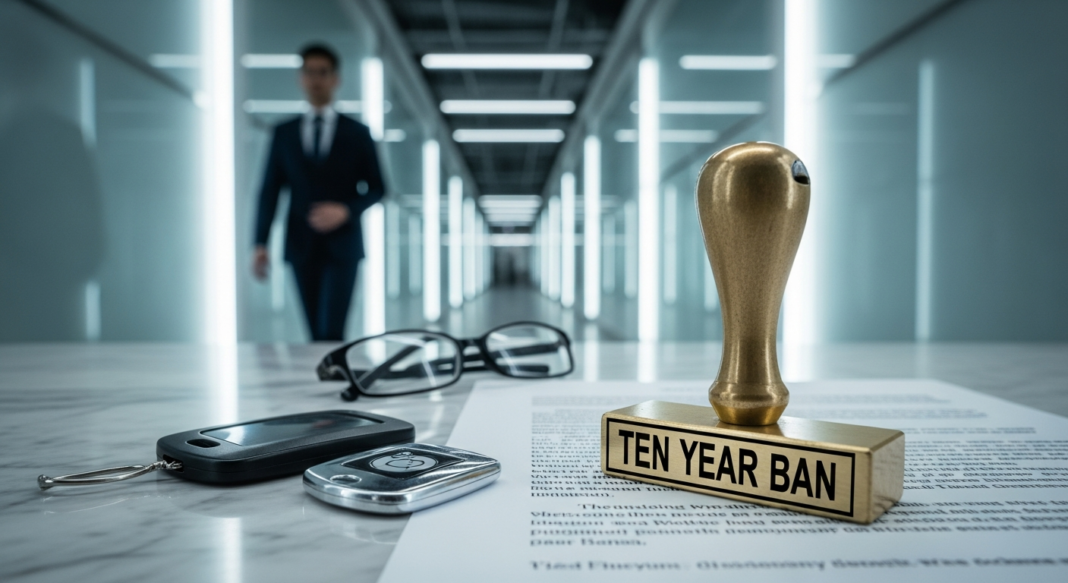
The regulatory hammer just dropped on the last of Sam Bankman-Fried’s inner circle, and the message is loud, clear, and predictably late: if you help cook the books, you don’t get to play in the kitchen for a decade. The SEC has officially barred Caroline Ellison, Gary Wang, and Nishad Singh from serving as officers or directors of public companies for the next ten years. For those of us who watched the 2017 ICO madness and the 2022 contagion, this isn’t exactly a shock, but it is a definitive end to an era of unchecked “founder-worship” that nearly burned the entire industry to the ground.
While the market barely flinched—Bitcoin continued its crab-walk and Ethereum didn’t even blink—the indifference of the price action masks the gravity of the precedent. In the old days, a crypto exchange collapse meant the founders vanished into a tropical sunset with a hard drive. This time, the regulators are ensuring that even the technical enablers are treated like the Wall Street villains they mimicked. The “move fast and break things” mantra has finally met the “f*ck around and find out” reality of federal oversight.
Engineering the Heist: The Tech Behind the ‘Unlimited Line of Credit’
To understand why these bans matter, we have to look past the headlines and into the actual code that Wang and Singh authored. This wasn’t a simple case of a CEO dipping into the cookie jar; it was a systemic, engineered bypass of the very risk protocols FTX claimed to champion. In most reputable exchanges, if your account balance hits zero, an automated liquidation engine kicks in. It’s cold, it’s mechanical, and it’s fair. It’s the law of the market.
However, the SEC’s investigation confirmed that Singh and Wang hardcoded a “backdoor” for Alameda Research. They essentially wrote a “get out of jail free” card into the exchange’s matching engine. Alameda was granted an “unlimited line of credit” that allowed them to maintain a negative balance using FTX customer deposits as collateral. This wasn’t a glitch; it was a feature. They didn’t just ignore the casino’s rules; they rewired the roulette wheel so the house gambler could never lose—until the house itself ran out of cash.
- The Hardcoded Bypass: Alameda’s account was exempted from the auto-liquidation features that governed every other user on the platform.
- Customer Fund Siphoning: This mechanism allowed billions in user deposits to be funneled into high-stakes, illiquid bets and venture capital plays that had zero chance of being liquidated in a crunch.
- Risk Obfuscation: While SBF was on Twitter (now X) touting FTX’s “advanced risk engine,” the engineering team knew that engine was intentionally broken for their sister company.
The 10-Year Exile: Why an O&D Ban is a Career Death Sentence
Some might argue that a 10-year ban from serving as a public company director or officer is a slap on the wrist compared to prison time. Ryan Salame is already looking at 7.5 years behind bars, and the rest of the crew is waiting for their final sentencing fates. But in the world of finance and tech, an “Officer and Director” (O&D) ban is a scarlet letter. It effectively removes these individuals from the legitimate economy for a decade.
Think about the lifecycle of a crypto cycle. In ten years, we might be through three more halving events. By the time Ellison or Wang are legally allowed to lead a company again, the industry will be unrecognizable. This ban signals that regulators are moving beyond just fines. They are using “professional decapitation” to ensure that the people who architected the industry’s biggest failure cannot simply wait for the dust to settle and launch “FTX 2.0” under a different name. This is a clear warning to any CTO or COO currently working at a major exchange: if you write the code that enables fraud, you aren’t just a “developer”—you are a co-conspirator in the eyes of the law.
Market Apathy and the ‘Old News’ Syndrome
It is telling that the market didn’t dump on this news. If this had happened in early 2023, we would have seen a sea of red candles. Today, the crypto market has developed a thick layer of scar tissue. We’ve survived the collapse of Luna, the bankruptcy of Celsius, and the implosion of Three Arrows Capital. Traders have priced in the FTX fallout to the point of exhaustion.
This apathy is a double-edged sword. On one hand, it shows the market’s resilience; Bitcoin has decoupled from the legal drama of its former “kings.” On the other hand, it suggests a dangerous level of complacency. We are seeing the same patterns emerge in new cycles—high-leverage “yield” products, celebrity-backed memecoins with no utility, and offshore exchanges with opaque balance sheets. The names change, but the math remains the same. If the only thing keeping you from losing money is the “honesty” of a founder, you haven’t learned the lesson of 2022.
Risk Assessment: The ‘New’ Centralized Exchange Reality
So, where does this leave you? The SEC’s crackdown is designed to make centralized exchanges (CEXs) safer, but it also makes them more corporate, more restricted, and more expensive to run. We are entering the era of “Regulated CeFi,” which looks a lot like the old banking system but with faster settlement times. Here is the reality check for anyone still using these platforms:
- Proof of Reserves is a Start, Not a Solution: Seeing a snapshot of an exchange’s wallet doesn’t tell you their liabilities. As we saw with FTX, an exchange can have billions in assets while being completely insolvent because of hidden debts and backdoors.
- The ‘Bank’ Comparison: If you use a CEX, you are using a bank that lacks FDIC insurance. In a bankruptcy, you are an “unsecured creditor.” That means you are last in line to get paid after the lawyers and the preferred lenders take their cut.
- Self-Custody is Non-Negotiable: The only way to truly opt out of the risk Ellison and Wang created is to hold your own keys. Use exchanges for what they are—trading hubs and fiat on-ramps—not as long-term storage for your life savings.
The 10-year ban on the FTX lieutenants is a necessary piece of closure, but it’s not a guarantee of safety. The next “Sam Bankman-Fried” is likely pitching a “revolutionary” new protocol right now, and they probably have a better haircut and a more convincing whitepaper. The regulatory screws are tightening, but in crypto, the only person truly responsible for your money is you. Stay skeptical, keep your assets in cold storage, and remember: if a platform offers you double-digit returns on stablecoins, they aren’t the genius—you are the liquidity.