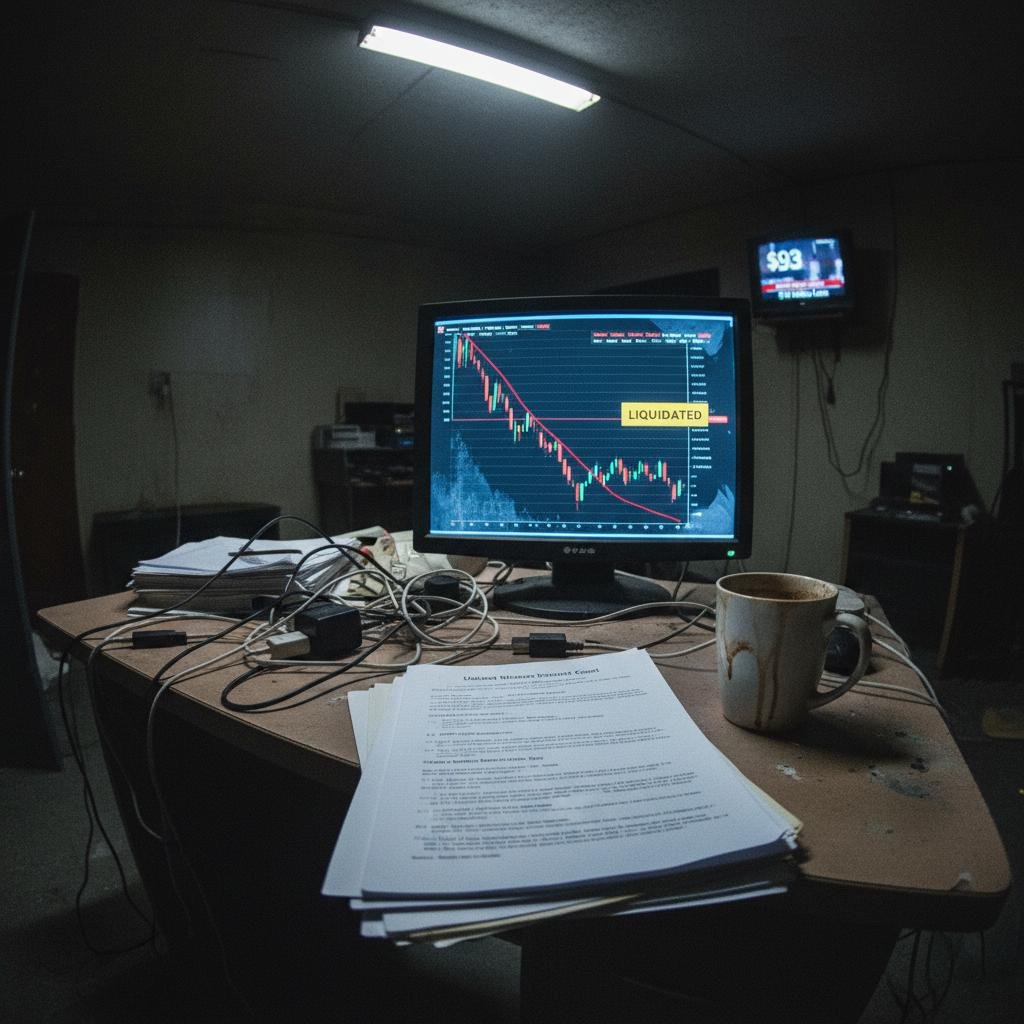
Another Day, Another DeFi Blow-Up – But This One Has a Lawsuit
Remember that cryptic announcement from Stream Finance back in early November? The one about an “external fund manager” inexplicably losing a cool $93 million in crypto, gutting about 17% of the Ethereum-based yield protocol’s entrusted assets? It rocked DeFi, left users scratching their heads, and the Stream team clamming up tighter than a HODLer in a bear market.
Well, the silence is officially broken. And boy, is it messy.
Stream’s co-founders, now suing as Stream Trading Corp., just dragged two individuals, Ryan DeMattia and Caleb McMeans, into federal court in San Francisco. Their allegation? That $93 million wasn’t just “lost.” It was allegedly used by DeMattia to cover his personal loan defaults. And McMeans, who supposedly took the reins of the protocol, is now accused of failing to honor his agreement and trying to play dodgeball with accountability.
This isn’t just another yield farm going bust. This is a full-blown crypto drama, complete with alleged personal enrichment, outright deception, and the kind of finger-pointing that makes your average Twitter spat look like a polite tea party. It highlights the murky dangers lurking when “decentralized” protocols lean too heavily on centralized, off-chain trust.
The Players, The Protocol, and The Perpetual Excuses
The lawsuit paints a picture of a protocol, Stream, that barely made it nine months. Its co-founders, including Argentinian crypto investor Diogenes Casares (who has publicly claimed his role), decided to pull the plug in November 2023, citing the usual suspects: slowing growth and “operational challenges.”
Enter Caleb McMeans, a trader apparently known for “complex yield farming strategies.” The co-founders met him just two months after shutting down deposits. McMeans saw an opportunity, offering to buy the Stream protocol and its brand. Sounds like a fresh start, right? Wrong.
An agreement, inked in January, laid out the terms. McMeans would get total control: trading strategies, reporting yields, handling withdrawals. Stream Trading Corp. would morph into a service provider, building new smart contracts, a website, and a shiny new token. In return, McMeans promised 35% of collected fees, *full liability* for any theft, and “total transparency of where stream positions are deployed.”
That last bit? The transparency? That’s where things allegedly started to unravel faster than a rug pull. McMeans, according to the lawsuit, started making “off-chain arrangements,” making it damn near impossible to keep tabs on Stream’s trading strategy in real-time. When the co-founders pressed for answers in September, they got a masterclass in obfuscation: “delays and excuses.”
The Laptop Crash, The Confession, and The Cover-Up
Eventually, McMeans admitted he’d let an “employee,” Ryan DeMattia, invest over $90 million off-chain. And DeMattia? He, too, allegedly played hard to get with information. The lawsuit claims DeMattia conjured up “a series of patently false excuses,” including the truly “outlandish story” that his laptop had been destroyed in a car crash. A car crash! In DeFi, even the excuses are cinematic.
What’s worse? McMeans allegedly urged Stream Trading Corp. to just “stop asking questions and to believe Mr. DeMattia.” Talk about burying your head in the sand. Or, more accurately, in a pile of potentially pilfered crypto.
McMeans eventually relented, acknowledging he had no formal relationship with DeMattia and agreeing to claw back the entrusted crypto. That’s when DeMattia finally came clean on November 2nd, confessing he’d lost “nearly all” of the $93 million. The precise mechanism remains fuzzy, but the lawsuit alleges DeMattia faced a margin call on a personal loan on October 10, 2023, got liquidated, and then allegedly dipped into Stream Protocol assets to cover his own colossal screw-up.
The public announcement on November 4th from Stream’s X account was notably vague, merely stating an “external fund manager” had “disclosed the loss.” No names, no specifics. Just a $93 million crater in the balance sheet.
The Ripple Effect: When One Man’s Loss Is Many Protocols’ Pain
This wasn’t a contained incident. The blast radius of Stream’s collapse was significant, sending shivers through the DeFi ecosystem. Stream had borrowed a staggering $283 million to mint its xUSD synthetic dollar. Trevee, another yield protocol, got hit for $14 million. Even “DeFi stalwarts” like Compound, Euler, and Morpho weren’t immune, showing various levels of exposure, according to crypto risk manager Chaos Labs.
The personal drama didn’t stop there. McMeans reportedly told people, both publicly and privately, that he was suicidal. And in a move that screams “shady,” he allegedly shifted $2.1 million in Stream assets to a personal wallet, then laundered them through Railgun, a privacy protocol designed to obscure crypto flows. He eventually returned the funds, but the attempt alone raises serious red flags about intent.
The co-founders, understandably concerned about McMeans’ state, convinced him to transfer the remaining assets to a multi-signature wallet. The idea? Prevent further loss if he “became incapacitated.” Instead, McMeans is allegedly using this joint control to deflect responsibility, refusing to “clean up his own mess” unless Stream Trading Corp. lets him off the hook entirely.
The “Why” and “How”: Lessons from the Digital Wild West
So, why did this happen? It’s a potent cocktail of misplaced trust, insufficient oversight, and the ever-present allure of easy money in a relatively unregulated space. The “how” is equally instructive:
- Off-Chain Blind Spots: Relying on individuals and off-chain agreements in a “decentralized” world is a recipe for disaster. The moment funds move outside the purview of transparent smart contracts, transparency dies, and risk skyrockets.
- Lack of Due Diligence: While McMeans was “known for managing complex yield farming strategies,” that reputation apparently didn’t translate into robust risk management or ethical conduct, according to the lawsuit. For users and partner protocols, this underscores the critical need for extreme due diligence on *anyone* handling significant capital.
- Vague Agreements & Loopholes: The initial agreement, while stipulating liability and transparency, seemingly had enough wiggle room for McMeans to allegedly route funds through an “employee” with devastating consequences. Legal frameworks in crypto are still evolving, and this case highlights the difficulty of enforcing traditional contracts in a digital asset context.
- Human Greed & Error: At the heart of it, the lawsuit points to a classic tale: an individual (DeMattia) allegedly using other people’s money to cover personal losses. This isn’t a bug of blockchain; it’s a feature of human nature, amplified by the speed and scale of crypto markets.
What Now? A Legal Showdown and a Call for Caution
Stream Trading Corp. isn’t backing down. They’re asking the federal court to enforce their agreement with McMeans, seeking damages of at least $75,000 (though the real figure is likely much higher given the $93 million loss) and a declaration that their contract is “valid, binding and enforceable.”
This lawsuit isn’t just about the money; it’s about accountability. It’s a stark reminder that even in DeFi, where trust is supposed to be programmatic, human elements can introduce colossal points of failure. For crypto traders and Web3 enthusiasts, the takeaway is brutal: trust, but verify. And then verify again. Because when $93 million vanishes, the excuses often come cheap, but the lessons are always expensive.