The Chaos Theory of Finance X: Why Rumors Travel Faster Than Math
Friday afternoon on Finance Twitter is usually a graveyard of half-baked technical analysis and macro-economic whining. But this past week, the vibe shifted from boring to apocalyptic. A viral post, complete with the requisite “BREAKING” sirens, claimed a systemically important U.S. bank had cratered. The culprit? A massive silver short position that supposedly blew up, forcing the Fed into an emergency liquidity injection. It was the perfect storm of populist rage and “hard money” vindication.
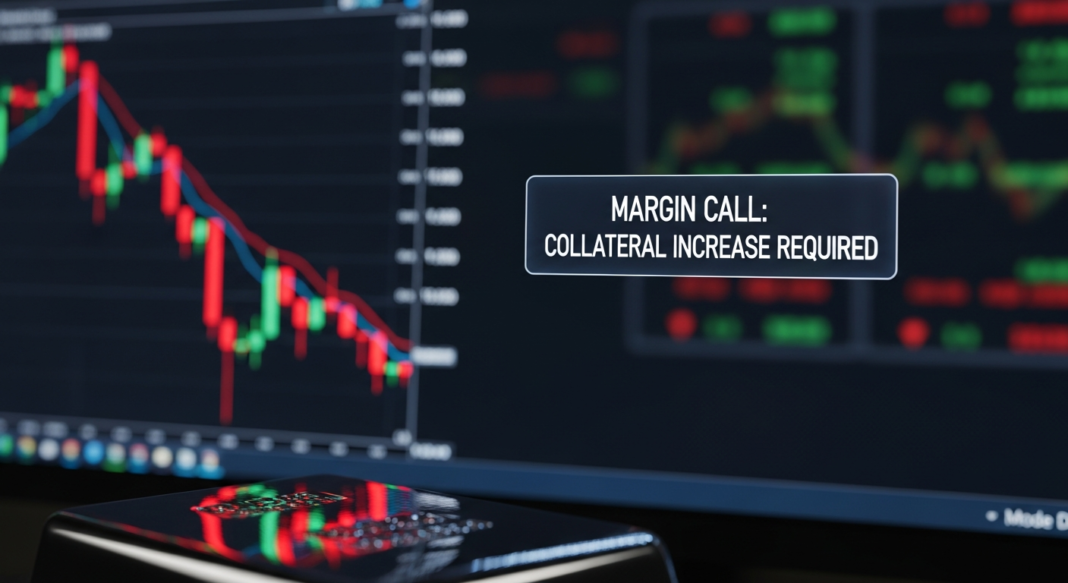
There is just one problem: the bank did not blow up. The Fed did not rush to the rescue. What actually happened was far more clinical, predictable, and—for anyone who has survived a crypto liquidation cascade—intimately familiar. It was a mechanical $675 million margin squeeze orchestrated by the CME Group, the world’s largest derivatives exchange. While the “Moonboys” were busy hunting for a falling bank, the CME simply updated its price list for staying in the game.
I’ve lived through the 2017 ICO madness and the 2022 FTX contagion. If there is one thing I’ve learned, it is that the “boring” technical notices are where the real bodies are buried. While the silver price was flirting with $75 and Bitcoin was chopping sideways, the CME quietly hiked the cost of doing business. This is not a conspiracy; it is the physics of leverage.
The $675 Million Math: Breaking Down the Margin Squeeze
To understand why silver took an 11% intraday dive, you have to ignore the tweets and look at the CME notice effective December 29. The exchange raised margin requirements for silver futures. In simple terms, a margin requirement is the security deposit you post to prove you can handle your losses. When volatility spikes, the exchange gets nervous and demands more cash to keep your position open.
The CME hiked the margin on the March 2026 silver contract by roughly $3,000—jumping from $22,000 to $25,000 per contract. On its own, $3,000 sounds like peanuts. But silver futures are a game of massive scale. One contract controls 5,000 ounces of silver. At $75 an ounce, that is $375,000 of exposure. Posting a $25,000 deposit for $375,000 of metal means you are running roughly 15x leverage. In the world of commodities, that is a massive amount of “dry tinder” waiting for a match.
According to the latest CFTC data, there are about 224,867 silver contracts currently open. When you multiply those contracts by the $3,000 margin hike, you get a staggering $675 million in additional collateral that traders had to cough up overnight. If you did not have the cash sitting in your account by Monday morning, your broker didn’t care about your “bank collapse” theories—they just hit the sell button on your position. That is what caused the 11% drop. It was a forced exit, not a systemic failure.
Mirroring the DeFi Summer: Same Physics, Different Asset
Crypto traders like to think we invented the liquidation cascade, but the metals markets have been doing this since the Hunt Brothers tried to corner silver in 1980. The mechanics we see today in the silver market are the exact same ones that wrecked decentralized finance (DeFi) during the “Summer of 2020” and the subsequent 2021 bull run.
In crypto, we call it a “long squeeze” or a “funding rate reset.” When everyone is leaning one way on a trade—usually long—and the exchange (like Binance or Bybit) increases risk controls or the price starts to slip, the smart contracts or risk engines start liquidating positions. This selling creates more price drops, which triggers more liquidations. It is a feedback loop of pain. We saw this earlier this year when $154 billion in crypto positions were wiped out in a matter of hours. The silver traders just got a taste of the “crypto experience” in a TradFi wrapper.
The intersection of silver and Bitcoin narratives is not accidental. Both assets are often traded by the same “hard money” enthusiasts who distrust central banks. When silver gets squeezed, it often drains liquidity from the broader speculative market. If a trader is getting margin-called on their silver position at the CME, they might sell their Bitcoin on Coinbase to cover the bill. Liquidity is a global pool; when one side gets a hole, the water level drops everywhere.
The Ghost in the Machine: Why We Love a Good Bank Failure
Why did the “bank blowup” rumor go viral? Because it fits a historical pattern of bad behavior in the precious metals space. This isn’t just paranoia. The Department of Justice and the CFTC have historically fined major bullion banks hundreds of millions of dollars for “spoofing”—placing fake orders to manipulate prices. When you have a history of banks behaving badly, every price move looks like a crime scene.
However, as a senior editor who has seen “Lehman moments” turn into nothing burgers, I have to emphasize the importance of verification. A major US bank failing would trigger a mandatory CME default notice. It would appear on the FDIC’s list of bank failures. It would show up in the Fed’s H.4.1 report. None of that happened. The “liquidity pump” people saw was likely just standard repo market operations, which happen every single day. In this industry, if you can’t verify it on-chain or through a regulatory filing, it is just fan fiction until proven otherwise.
- No CME Default Notice: The exchange has not flagged any clearing member as being in default.
- No Regulatory Alerts: Neither the Fed nor the Treasury has issued emergency statements.
- Price Action: An 11% drop is consistent with a margin-induced deleveraging, not a total market freeze.
Risk Assessment: The Warning Flare for Crypto Traders
If you trade crypto with leverage, this silver story is your warning flare. The CME’s silver volatility index (CVOL) was screaming “danger” well before the margin hike. In crypto, our version of CVOL is the funding rate and open interest. When you see open interest at all-time highs and funding rates becoming prohibitively expensive, you are standing in a room full of gasoline.
The risk here is not just “losing your trade.” The risk is the mechanical nature of modern markets. Exchanges—whether centralized like Binance or decentralized like Aave—are increasingly automated. They do not care about your “thesis” or your “long-term outlook.” They only care about the collateral. If the silver market can see a $675 million collateral call based on a boring regulatory notice, imagine what happens when a major Ethereum Layer 2 has a sequencing error or a stablecoin loses its peg by two cents.
My advice? Treat leverage like nitro fuel. It is great for a straight line, but it will melt your engine if you push it too hard during a turn. Separate the “stories” from the “mechanics.” The stories are for Twitter engagement; the mechanics are what actually move the money. If you find yourself chasing a rumor about a bank collapse, take a breath and check the margin requirements first. Usually, the truth is a lot less exciting—and a lot more expensive—than the fiction.
***Disclaimer: This analysis is for informational purposes only and does not constitute financial advice. Trading commodities and cryptocurrencies involves significant risk of loss.***