Crypto’s Iron Curtain Descends in Belarus
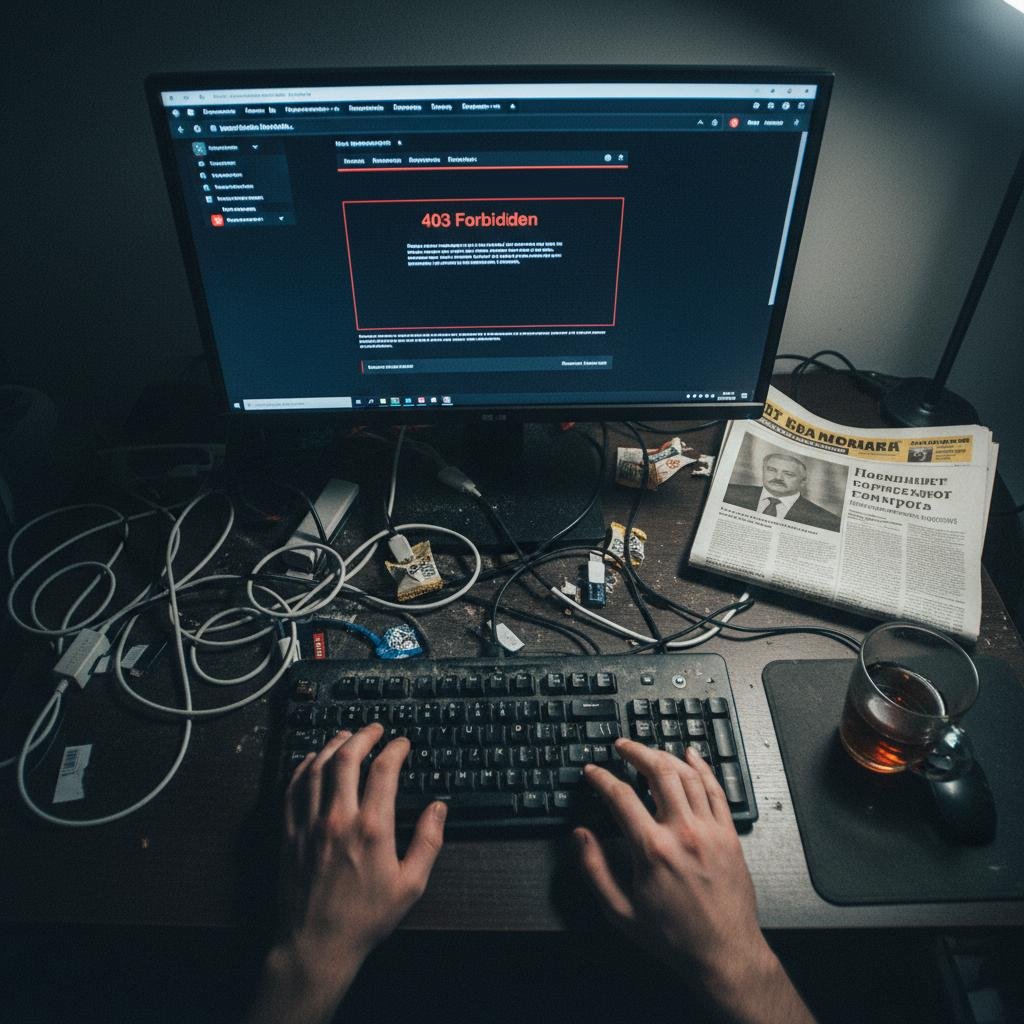
Remember when Belarus was supposed to be a crypto haven? President Alexander Lukashenko was out there, waxing poetic about national crypto reserves and turning barren land into mining farms. Sounds great, right? Well, scratch that fairytale. Just last week, the Belarusian Ministry of Information decided to play the heavy, yanking the plug on major crypto exchanges Bybit, Bitget, and OKX. No heads-up. No explanation. Just a digital “Access Denied” message for thousands of local traders trying to log in.
It’s December 10, according to the State Inspectorate for Supervision of Telecommunications’ blacklist, that these platforms joined the ranks of the digitally deceased. This isn’t some backroom rumor; Belarusian users of state-owned internet provider Beltelecom immediately hit the wall, finding themselves locked out of their accounts. The official line? A vague nod to the “Mass Media Act.” If that doesn’t scream transparency, what does?
The Whispers of Hypocrisy: Why Now, Why Them?
Here’s where it gets interesting – and deeply frustrating. This isn’t Belarus suddenly turning anti-crypto. Far from it. This year alone, Lukashenko was pushing hard for a national crypto mining sector. He even fantasized about a national crypto reserve. So, what changed? Is it a sudden burst of regulatory zeal, or something far more cynical?
The silence from the Ministry of Information is deafening. They aren’t talking to anyone but government cronies and ‘sanctioned’ media. Meanwhile, rival giants like Binance and KuCoin? They’re untouched. Still humming along, freely accessible to Belarusian traders. Coincidence? Or a calculated move to concentrate market activity, perhaps channeling users towards platforms more amenable to state oversight? The optics are terrible, suggesting favoritism or, worse, a selective crackdown designed to control rather than protect.
Then there’s the recent talk from Vasily Gerasimov, chairman of the State Control Committee. Just last month, he let slip that the government was building a centralized registry of crypto wallets tied to “criminal gangs.” Suddenly, the dots connect. This isn’t about fostering innovation; it’s about control. It’s about surveillance. The blocking of these exchanges might just be another step in a larger play to nationalize the very idea of cryptocurrency, twisting it into a state-controlled asset rather than a tool for financial freedom.
This isn’t an isolated incident either. Less than a week before the exchange blacklisting, the Ministry of Information also pulled the plug on Smart Miner, a bot-powered crypto-mining app. It seems the Belarusian government is systematically pruning the decentralized foliage, leaving only the state-sanctioned trees standing. It’s a classic authoritarian playbook: embrace the technology that benefits the state (mining for energy export, perhaps), but stifle the parts that empower individuals (unfettered access to global exchanges).
The Trader’s Tightrope: VPNs and Vanishing Funds
For the crypto traders in Belarus, this isn’t just an inconvenience; it’s a direct hit to their financial autonomy. The immediate reaction, predictably, is to fire up a VPN. But that’s a tightrope walk over a minefield. Onliner, a Belarusian news outlet, was quick to point out the dangers: many exchanges explicitly forbid login attempts from restricted jurisdictions or masked IP addresses. Violate those rules, and you’re not just bypassing a block; you’re risking your account being locked, your funds frozen, and your entire portfolio vanishing into the digital ether.
Imagine the stress. You wake up, ready to check your positions, only to find you can’t even log in. Your investments, your potential profits, your financial future – all held hostage by an opaque government decision. Even if you manage to use a VPN, you’re now operating in a grey area, constantly looking over your shoulder. This isn’t how a healthy, robust market functions. This isn’t how you build trust in a burgeoning industry. It creates a climate of fear, pushing legitimate traders into precarious positions and potentially making them targets for further crackdowns.
The broader implications stretch beyond Belarus’s borders. For Web3 enthusiasts and crypto traders globally, this serves as a stark reminder: governmental promises are fleeting, and the fight for decentralized access is constant. Even nations that appear ‘bullish’ on crypto can, at a moment’s notice, pivot to control and censorship. It underscores the vital importance of self-custody and understanding the regulatory risks inherent in any jurisdiction. When governments decide to pull the plug, your assets on a centralized exchange become an immediate liability.
What Now, Belarus?
The situation in Belarus is a messy cocktail of contradictory policies, opaque decision-making, and a blatant disregard for individual financial freedom. It highlights the constant tension between innovation and state control. While Lukashenko talks a big game about crypto, his Ministry of Information is quietly dismantling access to the very platforms that make crypto a global, accessible asset class. For Belarusian traders, the message is clear: the state giveth, and the state taketh away. And sometimes, it just blocks access without so much as a peep. Good luck out there.