We’ve seen this movie before. A project’s token price starts to sag, the community gets restless, and the founders suddenly announce a \”buyback program\” to save the day. Usually, it’s a PR stunt—a one-off purchase from a treasury that was already bloated with its own printed money. But as we move into the final days of 2025, Aster is trying to convince the market that its latest move isn’t just another exit liquidity event for early VCs. Starting December 23, the protocol is shifting to a “Stage 5” buyback structure that, on paper at least, trades discretionary hype for hard-coded discipline.
The 80% Revenue Bet: Desperation or Discipline?
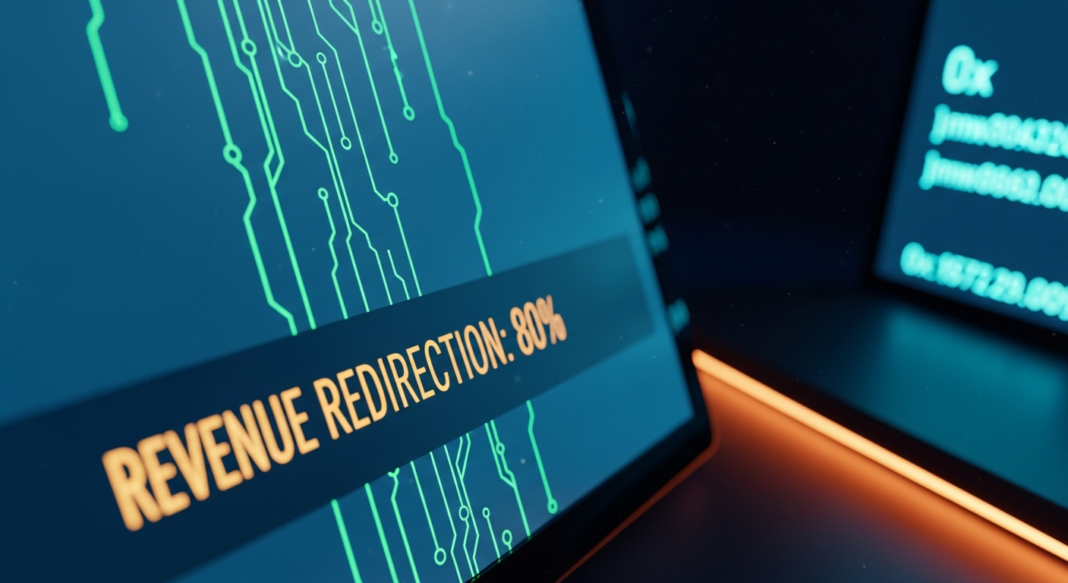
Aster isn’t just dipping into the treasury; they’re redirecting up to 80% of their daily platform fees to buy back $ASTER. For anyone who survived the 2022 wreckage, that number should raise an eyebrow. In a market where most protocols struggle to find a “real yield” that isn’t just token emissions, committing 80% of revenue to price support is an aggressive move. It signals either supreme confidence in their cash flow or an urgent need to shore up a tokenomics model that’s feeling the heat.
The program splits the capital into two buckets. The first 40% of daily fees goes into an automated, daily buyback. There is no “timing the market” here. No waiting for a dip. The smart contract executes the buy whether the price is mooning or cratering. This is DeFi’s version of dollar-cost averaging, and it’s designed to neutralize the “timing risk” that often leads to front-running by sophisticated MEV bots when buybacks are announced manually.
The remaining 20% to 40% goes into a “Strategic Buyback Reserve.” This is the protocol’s war chest. It’s meant to be deployed when volatility spikes or when some whale decides to dump their bag on a Tuesday morning. While Aster claims this provides “flexibility without guesswork,” we’ve seen discretionary reserves become political footballs in DAOs before. The saving grace here is the transparency; the protocol has already doxed the wallet addresses (0x5E49… for the reserve and 0x4786… for the automated buys), allowing any analyst with an Etherscan tab to verify if they’re actually putting their money where their mouth is.
The Ghost of 2020: Why “Buyback and Make” is Back
To understand why Aster is doing this, you have to look back at the DeFi Summer of 2020. Back then, “buyback and burn” was the gold standard, borrowed from the Binance/BNB playbook. The idea was simple: reduce supply, and price goes up. But the market eventually realized that burning tokens doesn’t matter if there’s no organic demand. By 2023, the narrative shifted to “Real Yield”—paying out fees in ETH or USDC.
Aster is attempting a middle ground. By using fees to buy $ASTER on the open market and (presumably) keeping it in the treasury or redistributing it, they are trying to create a reflexive loop. When the DEX sees high volume, the buyback pressure increases. This mirrors the “Buyback and Make” model popularized by projects like Yearn Finance in its prime. The difference now is the scale. In 2021, a 5.5 million USDT buyback (the amount Aster says it spent in Stage 4) would have been a blip. In the more consolidated market of 2025, it’s a significant amount of buy-side pressure for a single-week window.
Technical Breakdown: The MEV Problem
From a technical standpoint, automated daily buybacks are a double-edged sword. If you announce to the world that you are buying a specific token at a specific time every day, you are essentially painting a bullseye on your back for arbitrageurs and sandwich bots.
Aster says they are smoothing out timing risk to avoid “short-term speculation.” However, the efficacy of this depends entirely on their execution mechanism. If they’re routing these buys through a standard AMM without slippage protection or private RPCs, they’re just handing free money to JIT (Just-In-Time) liquidity providers. For the $ASTER holders, the “value” being delivered might be slightly diluted by the “tax” paid to the bots that front-run the protocol’s own automated orders. The team is leaning heavily on the “predictability” factor, but in crypto, predictability is often synonymous with exploitability.
Analysis of the Receipts: Looking at the Stage 4 Data
Aster didn’t just pull these numbers out of thin air. They released the results from Stage 4 (Dec 15–21) as a proof of concept. They claim to have spent 5.5 million USDT to repurchase roughly 6.55 million $ASTER at an average price of $0.84.
- Total Spend: 5.5 Million USDT
- Average Price: $0.84
- Verification: All transactions are recorded on the 0x573c… wallet.
This data gives us a baseline. At $0.84, the market was finding some equilibrium. The shift to Stage 5, which formalizes the 80% fee allocation, suggests the protocol is ready to turn the volume up. But here is the cynical take: if you have to spend $5.5 million a week just to maintain an $0.84 floor, what happens when the market goes quiet? The reliance on platform fees means this entire tokenomic structure is “pro-cyclical.” It works beautifully when everyone is trading, but it offers the least support exactly when the token needs it most—during a volume drought.
The Risk Assessment: What Could Go Wrong?
No senior editor worth their salt would let you buy into this without looking at the bear case. While systematic buybacks sound like “adulting” for DeFi, they carry specific risks that the marketing materials won’t tell you.
First, there’s the Revenue Risk. Aster is tying its token’s life support to its DEX volume. If a competitor launches a more efficient aggregator or a “vampire attack” siphons away their liquidity, the buybacks will vanish. Unlike a project with a massive, stagnant treasury, Aster’s model requires constant motion. If the music stops, the buybacks stop.
Second, we have the Opportunity Cost. By spending 80% of revenue on price support, Aster is not spending that money on R&D, security audits, or aggressive user acquisition. In the long run, a project that spends all its money buying its own stock instead of building a better product usually gets disrupted by a leaner, meaner competitor.
Finally, there’s the Regulatory Shadow. In many jurisdictions, systematic buybacks funded by protocol revenue look a lot like dividends. We’ve seen the SEC and other global regulators eye these models with suspicion. While Aster is currently operating in the DeFi “wild west,” a move toward this level of “structured corporate-style buybacks” might inadvertently put them in the crosshairs of regulators looking for “unregistered securities.”
The Verdict
Aster’s Stage 5 program is a bold experiment in “forced maturity.” They are moving away from the “trust me, bro” school of treasury management toward something that can be modeled on a spreadsheet. For traders, the daily buyback provides a predictable level of liquidity. For the long-term skeptics, it’s a high-stakes bet that their DEX will remain relevant enough to keep the fees flowing.
Starting December 23, the on-chain wallets will tell the real story. In crypto, you don’t listen to what the founders say; you watch what the smart contracts do. Aster is betting that structure is the new hype. We’ll see if the market agrees, or if this is just a very expensive way to delay the inevitable.
Disclosure: This analysis is for informational purposes only and does not constitute financial advice. The crypto market is volatile; never invest more than you can afford to lose.