The Ghost Finally Has a (Regulatory) Home?
Binance, the undisputed heavyweight champion of crypto exchanges, just pulled its classic disappearing act again. For years, the exchange has played whack-a-mole with regulators, expertly dodging the dreaded “headquarters” question. But now, with a shiny new license in Abu Dhabi, everyone’s asking: Is this it? Did the ghost of crypto finally find a home? Don’t bet on a straightforward answer.
On Sunday, the exchange announced a major win: Abu Dhabi’s Financial Services Regulatory Authority (FSRA) gave the green light for three of its entities to operate. We’re talking an exchange, a clearing house, and a broker-dealer. Essentially, everything you need to run a full-blown global operation – spot, derivatives, custody, over-the-counter services. All under the banner of “Binance.com.”
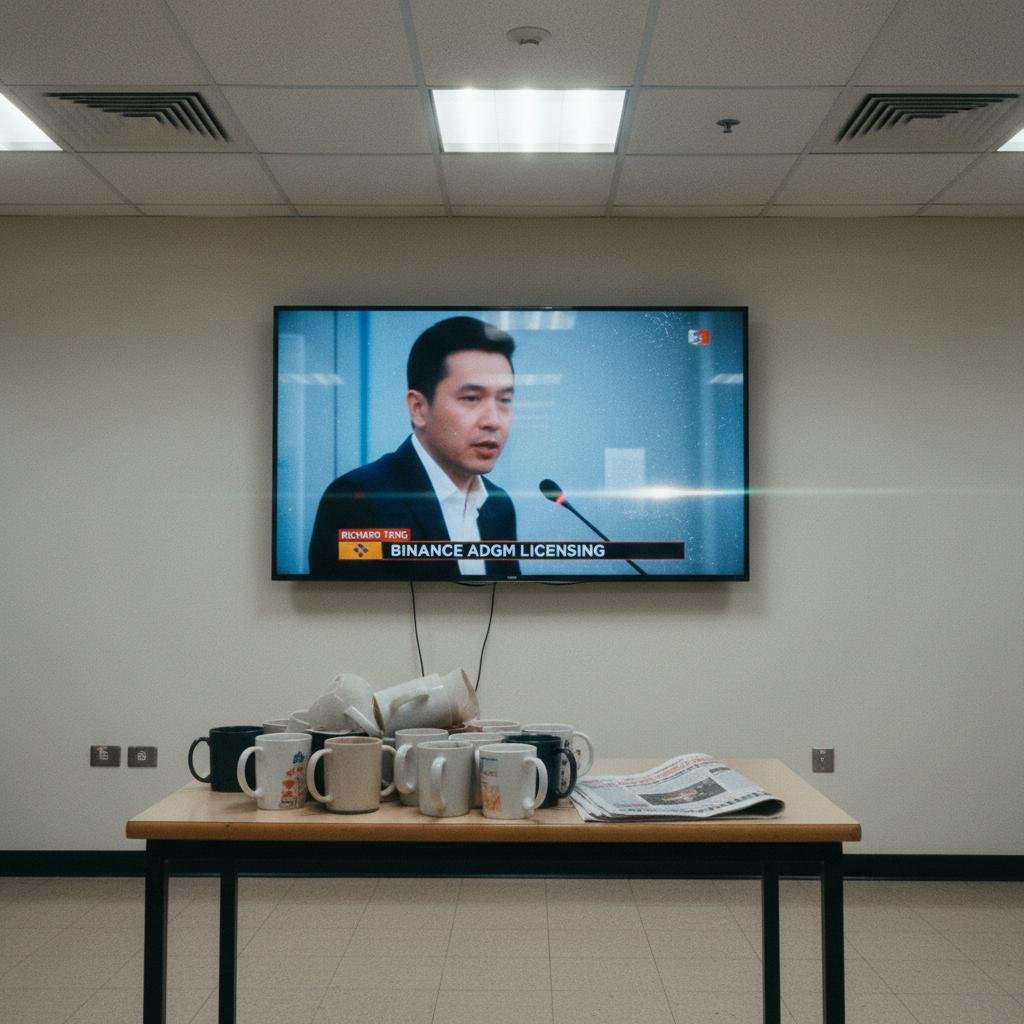
Binance co-CEO Richard Teng called it an “important milestone.” He’s not wrong. For a company that’s built its empire on a deliberately nebulous, “wherever-CZ-is-that’s-our-HQ” philosophy, this Abu Dhabi move is a massive step towards something resembling traditional corporate legitimacy. But don’t expect a clear answer on the HQ front. A company spokesperson, ever the poet, told DL News it “feels a bit old-fashioned” to ask where their headquarters is. Right. Because every other multi-billion dollar financial institution is just winging it.
The Never-Ending Hunt for a Home
Binance’s refusal to plant a flag isn’t some quirky startup vibe; it’s a deliberate strategy that has drawn intense scrutiny. When Changpeng Zhao (CZ) launched the exchange in Shanghai in 2017, China’s crypto crackdown quickly sent them packing. Since then, it’s been a global game of musical chairs:
- First, Japan.
- Then, Malta.
- Corporate registrations in the Cayman Islands and Seychelles.
- A failed attempt in Singapore in 2021.
- And lately, a heavy presence in the United Arab Emirates, particularly Dubai.
This isn’t about seeking out friendly climates; it’s about avoiding being tied down. Leadership has preferred incorporating various local entities wherever Binance operates, a fragmented approach that allows them to claim “distributed operations” while conducting global business.
Regulators Are Not Amused
This lack of a fixed address isn’t just a fun fact for crypto trivia nights. It’s a gaping hole that regulators hate. And they’ve called Binance out for it, big time.
Back in 2023, the U.S. Commodities and Futures Trading Commission (CFTC) used Binance’s headless nature as a key point in its charges against Zhao and several Binance entities. The accusation? Willful evasion of federal law. The CFTC didn’t mince words, stating Zhao believed “Binance’s headquarters is wherever he is located at any point in time, reflecting a deliberate approach to attempt to avoid regulation.” They even cited an internal meeting where Zhao reportedly explained the company incorporates in different jurisdictions to “keep countries clean [of violations of law].” Translation: Play by the rules of the smallest jurisdiction possible, or no rules at all.
Contrast this with other major players. Coinbase moved its HQ to Texas in November. Kraken opted for Wyoming in June. They embrace transparency, or at least the appearance of it. Binance, meanwhile, has always chosen obfuscation. Until now?
Abu Dhabi: The Unofficial HQ?
With this latest Abu Dhabi agreement, that “distributed operations” argument is getting harder to swallow. The Abu Dhabi Global Market (ADGM), a prominent free economic zone, is increasingly looking like Binance’s de-facto global headquarters. Why?
- **Comprehensive Licensing:** The three licenses allow them to run their entire global exchange business from ADGM. That’s not just a local branch; it’s the core engine.
- **Strategic Investment:** This isn’t happening in a vacuum. Nine months prior, the Abu Dhabi-backed investment group MGX pumped a cool $2 billion into Binance. Money talks, and $2 billion shouts.
- **The Richard Teng Connection:** Binance’s co-CEO, Richard Teng, wasn’t just pulled off the street. He spent six years as the CEO of ADGM. The man knows the regulatory landscape there inside and out. That’s a serious home-field advantage.
His Excellency Ahmed Jasmin Al Zaabi, the chairman of ADGM, practically rolled out the red carpet, “pleased to welcome Binance, a key global player in digital assets and financial innovation, to ADGM.” No wonder. This is a massive win for Abu Dhabi’s ambitions to become a global crypto hub.
What This Means for the Market
This isn’t just about Binance finding a postcode. This move has significant implications for the broader crypto market:
- **Regulatory Legitimacy:** For Binance, it’s a huge step towards shedding its “wild west” image. A robust license from a respected jurisdiction like ADGM could boost institutional confidence and pave the way for more mainstream adoption of Binance’s services. This isn’t just about avoiding fines; it’s about attracting serious money.
- **Shift in Power:** The Middle East, particularly the UAE, continues to solidify its position as a burgeoning crypto capital. As other regions grapple with unclear or hostile regulatory frameworks, places like ADGM offer stability and a clear path forward, attracting major players and capital.
- **Market Stability:** A more regulated Binance, particularly one with clearer operational guidelines, could contribute to greater market stability. Less regulatory uncertainty for the largest exchange often translates to less systemic risk for the entire industry.
Teng, in a diplomatic flourish, still maintains “global operations remain distributed” and this approval merely offers a “regulatory foundation.” The company spokesperson reiterated: “We are a global, remote-first business with people and operations all over the world.”
Call it what you want, but when you house your entire global exchange, clearing, and broker-dealer operations in one regulated free zone, after a multi-billion dollar investment from that zone’s backers, and with your co-CEO having previously run the show there… well, it looks an awful lot like a headquarters. Binance might not want to admit it, but Abu Dhabi just became the closest thing they’ve ever had to a fixed address. And for crypto traders, that’s a signal of increasing, if still begrudging, maturation in the institutional landscape.