The Pendulum Swings, But Atkins Wants to Lock It Down
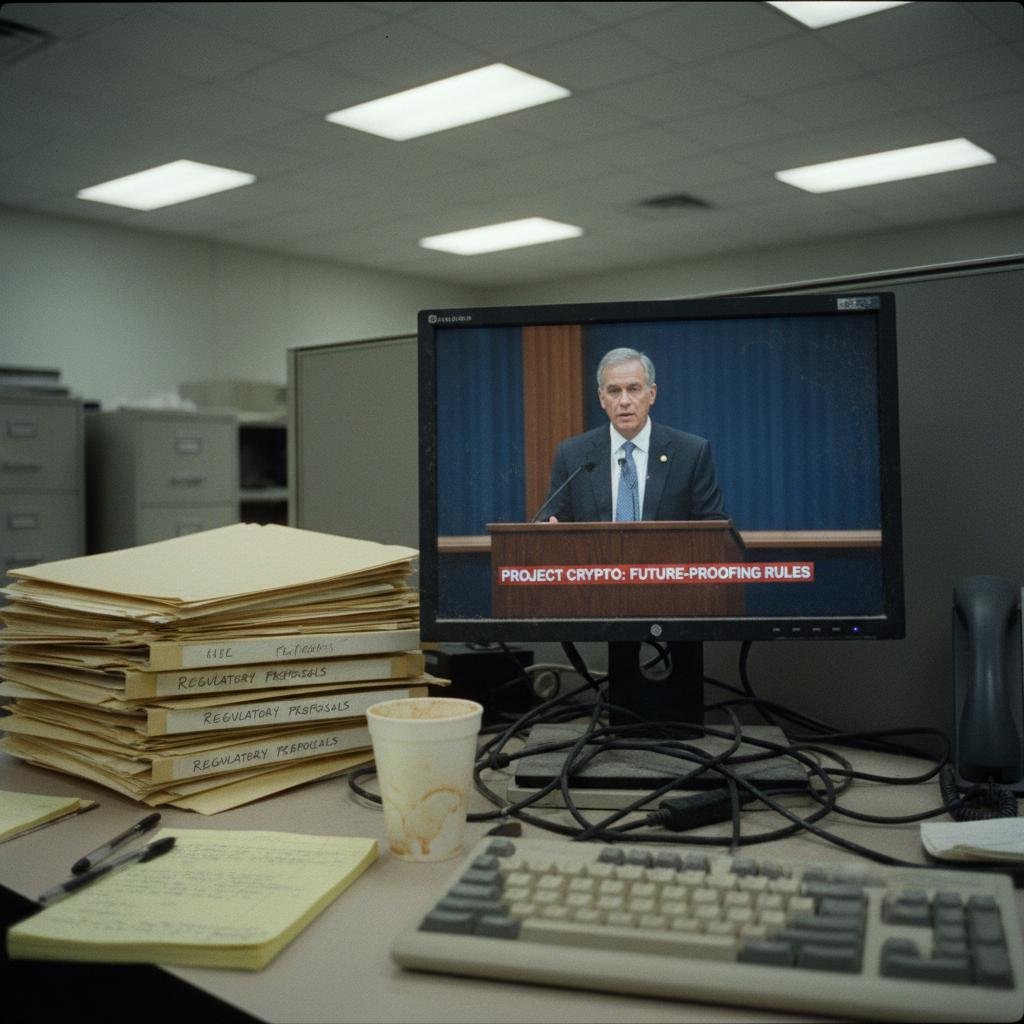
Another week, another SEC pronouncement. But this time, it’s not a lawsuit. SEC Chair Paul Atkins is on a mission: ‘Project Crypto’ aims to revamp how the US regulates digital assets. His big idea? To “future-proof what we’re doing,” as he put it at the Blockchain Association’s summit. He wants to lock it in, so no future administration can undo his work. Good luck with that, Paul. Because in the volatile world of crypto, ‘future-proofing’ is usually a pipe dream.
The crypto market has spent years in regulatory limbo, a frustrating dance between innovation and enforcement. Projects launch, investors pile in, then the SEC swoops in with a ‘securities violation’ claim. This constant uncertainty stifles growth, scares away traditional institutions, and makes the US look unprepared. Atkins, to his credit, seems to grasp this. He wants a durable framework, one that can withstand political whims. It’s an ambitious goal, one that could reshape crypto’s relationship with the US government.
Project Crypto: Lofty Goals, Sparse Details
Atkins first floated ‘Project Crypto’ in July, promising a “plan for crypto market primacy” that would dissect the shift from ‘off-chain’ to ‘on-chain’ markets. His staff’s marching orders are ambitious: proposals to clear up crypto asset regulatory status, ease traditional financial institution (TradFi) crypto custody, enable ‘super-apps,’ and “unleash the potential of on-chain software systems.”
These aren’t small asks. The lack of clarity around what constitutes a ‘security’ has been crypto’s biggest headache for years. Is Bitcoin a commodity? Ethereum? Your latest meme coin? Answering these questions could unlock billions in institutional capital. Making it easier for TradFi to hold crypto means major banks could offer crypto services, bringing legitimacy and massive scale. ‘Super-apps’ integrate everything from banking to investing, and seamless crypto integration would make digital assets a native component of finance, not an awkward add-on. Lastly, “unleashing the potential of on-chain software systems” means recognizing blockchain as a new infrastructure for financial markets, potentially making them faster, cheaper, and more transparent. The implications for clearing, settlement, and asset issuance are profound.
Four Categories, One Focus: Tokenized Securities
Atkins laid out his philosophy in November: crypto assets fall into four buckets – digital commodities, collectibles, tools, and tokenized securities. The bombshell? Only tokenized securities, he argued, should fall under the SEC’s purview. This distinction is critical. If Bitcoin and Ethereum are commodities (as many believe), and NFTs are collectibles or tools, then a huge swath of the market would escape the SEC’s primary jurisdiction. This would be a massive relief for countless projects and a significant blow to the SEC’s expansive claims of authority.
Moving forward, the SEC’s crypto focus will be squarely on these tokenized securities. Atkins specifically singled out existing trading rules as “ripe for change.” Why? Because rules crafted for paper certificates and centralized exchanges simply “don’t really make sense in a tokenized on-chain world.” Traditional stock trading involves layers of intermediaries and takes days to settle. On-chain trading, with smart contracts and instant settlement, renders many of those processes obsolete. The SEC’s challenge is updating regulations without gutting investor protection and market integrity in this new paradigm. It’s a wholesale re-evaluation of how financial markets actually function.
Citadel Cries Foul: The Battle for Market Structure
But not everyone’s popping champagne. Citadel Securities, a US market-making giant, fired off a letter to the SEC this month. Their warning? Relaxing rules could “fracture US equities markets” by privileging decentralized exchanges (DEXs) over traditional players. Citadel’s argument: if DEXs operate with looser rules, it creates an uneven playing field. As market makers, their business relies on efficient, centralized markets. A move towards decentralized, less regulated trading threatens their operational model and profits. It’s a classic clash between the old guard and disruptive new tech, and Citadel is drawing a clear line.
Atkins, however, isn’t buying the ‘walled garden’ argument. He flat-out rejected boxing off traditional markets from the smaller, dynamic crypto market. “The whole ethos behind distributed ledger technology is interoperability and freedom of movement,” he declared. “That is the central, fundamental principle that we ought to uphold. So let people innovate. Let the market decide what it wants to do.” This is a crucial philosophical statement. Atkins is siding with the open, permissionless nature of blockchain against the closed, controlled systems of traditional finance. His vision: crypto as an integrated, foundational layer for future financial innovation. ‘Let the market decide’ is a powerful rallying cry in crypto, but terrifying for institutions accustomed to strict control.
What This Means For You
For crypto traders and Web3 enthusiasts, Atkins’ push is mostly positive. Clearer rules, especially around asset classification, could end the regulatory whack-a-mole plaguing the industry. This might accelerate institutional adoption, bringing more capital and legitimacy. Imagine major financial institutions not just custodying crypto, but actively participating in DeFi protocols, driving liquidity and innovation. This could lead to a more mature, perhaps less volatile market – but also a more regulated one. The challenge? Ensuring ‘future-proof’ doesn’t mean ‘innovation-stifled.’ The balance between protection and progress is delicate. The outcome of ‘Project Crypto’ will define the US crypto landscape for years. The stakes are high. Whether Atkins cements a flexible framework or adds to the quagmire remains to be seen. But the fight for crypto’s regulatory future is far from over.