Venezuela’s Desperate Dive into Digital
Forget the hype cycles and meme coin mania for a moment. In Venezuela, crypto isn’t some shiny new investment — it’s a lifeline. The country just rocketed to 11th globally for crypto adoption in 2025, up from 14th the previous year. This isn’t about chasing gains; it’s about basic survival in an economy battered beyond recognition.
Imagine a nation of 27 million where the average person scrapes by on a GDP per capita of just $3,100. For context, the U.S. clocks in at a hefty $89,000. This stark contrast highlights the desperate circumstances driving Venezuelans to digital assets. As Ari Redbord, global head of policy and government affairs at TRM Labs, told DL News, Venezuela is now “among the world’s highest-adoption countries despite its relatively small formal economy.” He added, “That ranking reflects substantial crypto usage in relative and functional terms, particularly for payments, remittances, and value preservation.”
Trump’s Pressure Cooker: A Catalyst for Crypto
This isn’t just an economic story; it’s a geopolitical thriller. The surge in crypto use comes amidst escalating pressure from the Trump administration on Nicolás Maduro’s government. Trump, accusing Maduro of running a drug cartel, ramped up the heat significantly. We’re talking about the Pentagon deploying a nuclear-powered submarine, surveillance aircraft, and 15,000 troops to the Caribbean. This isn’t a diplomatic spat; it’s a show of force, plain and simple.
The stakes got even higher when U.S. forces seized the oil tanker Skipper off Venezuela’s coast, claiming it was involved in Caracas’s efforts to support Cuba. The White House even hinted at more seizures. Then came the truly explosive part: U.S. Secretary of War, Pete Hegseth, authorized lethal strikes on alleged drug boats, killing dozens. These attacks drew condemnation from both Democrats and Republicans, who labeled them war crimes. Trump, predictably, justified the campaign as crucial in the fight against fentanyl trafficking.
Redbord pointed out the obvious connection: “In the wake of the tanker seizure, it is clearer than ever that the United States is focused on stopping Venezuelan oil and financial flows — using every available tool to disrupt sanctions evasion and financial crime networks — and crypto is one piece of that puzzle.” The U.S. wants to choke off financial avenues, and guess what fills the void? Decentralized networks.
Stablecoins: The New Bolívar (and Dollar)
Decades of hyperinflation shredded the bolívar. Venezuelan banks? They’re largely a joke. Millions now rely on anything but the official currency: U.S. dollars (often hard to get), cash (ditto), and increasingly, crypto. Specifically, dollar-backed stablecoins. These digital assets offer a semblance of price stability and a gateway to the global economy that the local currency simply cannot.
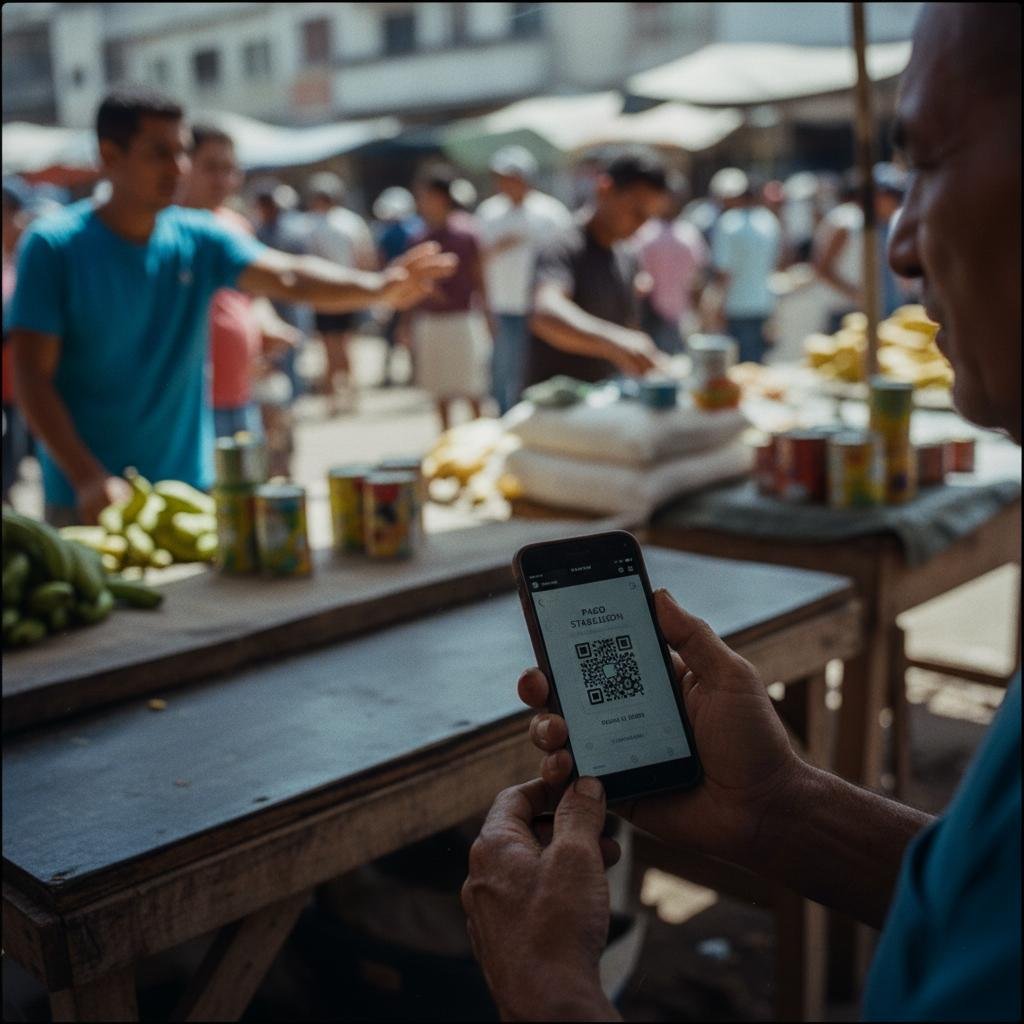
This isn’t niche tech adoption. Venezuelans are using crypto for everything from remittances to salary payments and peer-to-peer transfers. They’re doing it through informal markets and local fintech platforms that often run alongside the big, regulated exchanges. Onchain data might not give us a precise market share, but the trend is undeniable. Redbord confirmed, “Our analysis indicates that crypto plays an increasingly meaningful role relative to the overall economy.” Italo Atencio, president of The National Association of Supermarkets and Self-Service Stores, even told national broadcaster Noticiero Venevision that customers are regularly paying for groceries in crypto “across the country.” This isn’t future-speak; it’s happening now, in real life, for real necessities.
The Double-Edged Sword of Global Regulation
While crypto offers a lifeline, U.S. regulatory efforts could inadvertently complicate things for those who need it most. The Trump administration pushed to onshore crypto, aiming to bring it under U.S. regulatory oversight. This sounds good on paper for compliance, but Redbord warned about the ripple effects. “As more crypto liquidity, infrastructure, and enforcement capability concentrates in well-regulated jurisdictions, it becomes harder for sanctioned actors to rely on loosely governed offshore platforms to move value at scale,” he said.
Increased coordination between U.S. regulators, law enforcement, and crypto companies does “increase the risk and cost of sanctions evasion.” For Venezuelans, this doesn’t wipe out domestic crypto use. They’ll still pay for groceries. But it definitely “narrows the pathways for converting crypto into usable cross-border value without exposure to enforcement.”
So, while the U.S. flexes its muscles to isolate regimes, it simultaneously pushes ordinary citizens into the very digital financial systems it seeks to control. It’s a high-stakes game of cat and mouse, where crypto isn’t just a speculative asset, but a desperate tool for survival in a volatile world.