The Great SEC Retreat: Why Maxine Waters is Pulling the Alarm Cord
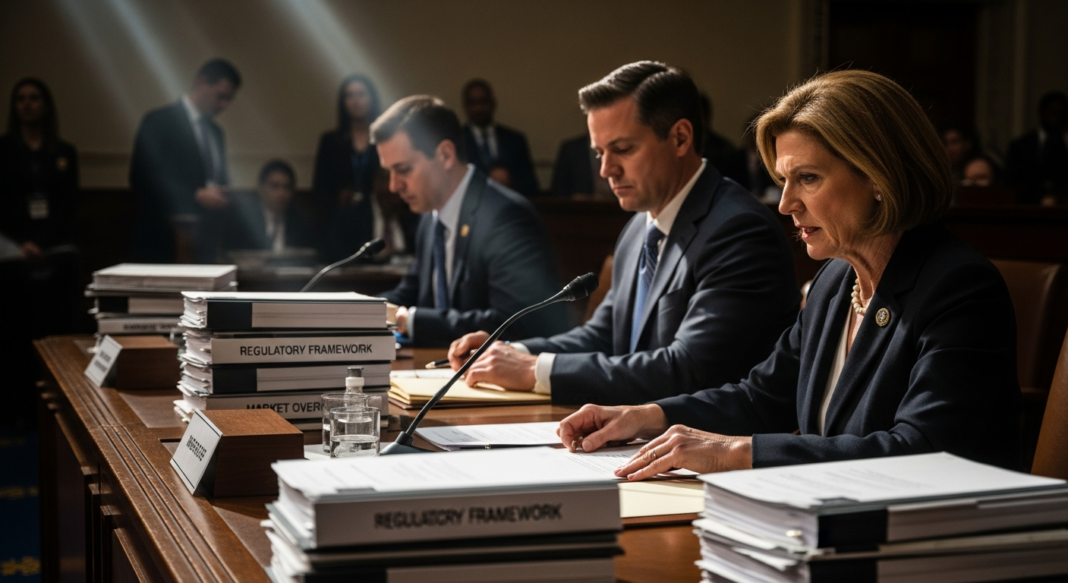
In the high-stakes game of regulatory chicken between Washington and the crypto industry, the music just stopped—and Maxine Waters is ready to flip the table. On December 29, 2025, Waters, the ranking Democrat on the House Financial Services Committee, fired off a letter to Chairman French Hill that effectively serves as a declaration of war against the current SEC leadership. Her target? Paul Atkins, the man currently steering the Securities and Exchange Commission away from the scorched-earth litigation tactics of the Gary Gensler era.
Waters isn’t just asking for a meeting; she’s demanding an oversight hearing. She wants to know why a litany of high-profile cases against the industry’s biggest titans—Coinbase, Binance, Kraken, Ripple, and even the controversial Justin Sun—have suddenly hit a brick wall. For those of us who lived through the 2017 ICO craze and the subsequent 2022 bloodbath, this isn’t just bureaucratic bickering. It’s a fight over whether the guardrails are being dismantled or simply redesigned for a more mature market. The cynical take? It’s a political fire sale. The optimistic take? It’s the long-overdue death of “regulation by enforcement.”
From ‘Enforcement by Litigation’ to the Big Chill
To understand why Waters is so incensed, you have to remember where we were just eighteen months ago. Under previous leadership, the SEC operated on a “shoot first, ask questions later” basis. They treated the Howey Test—a 1946 Supreme Court ruling about orange groves—like a magic wand to turn every digital asset into a security. It led to multi-year, multi-million dollar legal battles that drained industry resources and pushed innovation offshore to Dubai and Singapore.
Since the change in administration, the vibe has shifted from predatory to permissive. Reports indicate that the SEC has terminated or stayed several enforcement actions that were previously considered “existential threats” to the firms involved. Waters’ letter identifies nine specific areas of concern, questioning whether these decisions were driven by legal merit or “outside pressures.” In plain English: she’s accusing the SEC of doing favors for the crypto lobby that helped pave the way for the current political landscape.
- Coinbase: The SEC’s pursuit of the largest US exchange over its staking programs and asset listings appears to be losing steam.
- Binance: After the historic $4 billion settlement in 2023, the remaining civil litigation regarding “unregistered securities” is reportedly being throttled back.
- Ripple: The case that refused to die. After years of litigation, the SEC’s appetite for further appeals seems to have vanished overnight.
- Justin Sun: The TRON founder, a perennial target of regulators, may be seeing his legal clouds clear as the SEC narrows its focus.
The Expertise Gap: How Dropping a Case Actually Works
When the SEC “stays” a case, they aren’t necessarily saying the defendant is innocent. A stay is a temporary halt—a tactical pause. However, in the context of the current political climate, a stay is often a prelude to a quiet dismissal or a “no-action” letter. This is a technical maneuver that allows the agency to pivot its policy without admitting they were wrong for the last four years. By dropping these cases, the SEC avoids setting unfavorable legal precedents in higher courts that could permanently strip them of their power to regulate digital assets.
For traders, this is a double-edged sword. On one hand, the removal of “regulatory overhang” is a massive bullish catalyst. Markets hate uncertainty more than they hate bad news. When the threat of a billion-dollar fine or a forced delisting disappears, liquidity returns. On the other hand, a lack of enforcement can lead to the kind of “Wild West” behavior that preceded the FTX collapse. If the SEC stops policing the perimeter, the bad actors who were hiding in the shadows will inevitably crawl back out.
Historical Echoes: Is This 2019 All Over Again?
We’ve seen this movie before. In the aftermath of the 2017 bubble, the SEC went through a period of relative quiet before ramping up the “Regulation by Enforcement” machine in 2020. The current retreat mirrors the late-period Clayton era, where the agency struggled to define what exactly it wanted to do with crypto. The difference now is the scale. In 2019, we were arguing about $20 million ICOs. Today, we’re talking about the fundamental infrastructure of the global financial system—trillion-dollar asset classes and institutional-grade exchanges.
Waters’ concern about the “politicization” of the SEC is particularly ironic for anyone who watched the agency over the last few years. The crypto industry has long argued that the SEC was politicized *against* them. Now that the shoe is on the other foot, the Democrats are realizing that the same discretionary power they cheered when it was used to sue Kraken can also be used to let Kraken off the hook. This is the inherent flaw in relying on agency discretion rather than clear, congressionally mandated laws.
The Risk Assessment: The Shadow of the Pendulum
The biggest risk here isn’t a lack of enforcement; it’s the whiplash. If the SEC drops these cases today without a permanent legislative framework like MiCA in Europe or a clear US bill, the entire industry remains at the mercy of the next election cycle. If the political winds shift again in 2028, a new SEC Chair could simply reopen the files and start the lawsuits all over again. This “regulation by whim” is a recipe for long-term instability.
Furthermore, Waters’ push for a public hearing could create a “headline risk” event. If Paul Atkins is forced to testify and handles the questioning poorly, it could spook institutional investors who are currently dipping their toes into Bitcoin ETFs. They want a stable regulatory environment, not a partisan circus. If the SEC appears to be in total disarray or legally compromised, that “Institutional Adoption” narrative takes a major hit.
In the short term, expect more volatility in the tokens linked to these cases (XRP, BNB, ADA). While the “SEC is quitting” narrative is bullish, the “Congress is investigating why the SEC is quitting” narrative is a messy complication. This isn’t financial advice—it’s a warning that the legal drama in D.C. is far from over. Maxine Waters has been in this game too long to go away quietly, and for the crypto industry, the price of freedom from the SEC might just be a very uncomfortable seat in a House hearing room.