“Insider-Rigged Casino”? Solana, Pump.fun Execs Sued as 5,000 Messages Surface
You thought memecoins were a wild gamble? Turns out, some folks allege they were never a gamble at all – just a rigged game designed to fleece retail investors. And now, a bombshell discovery of over 5,000 private messages could blow the lid off what plaintiffs are calling an “insider-rigged casino” in federal court.
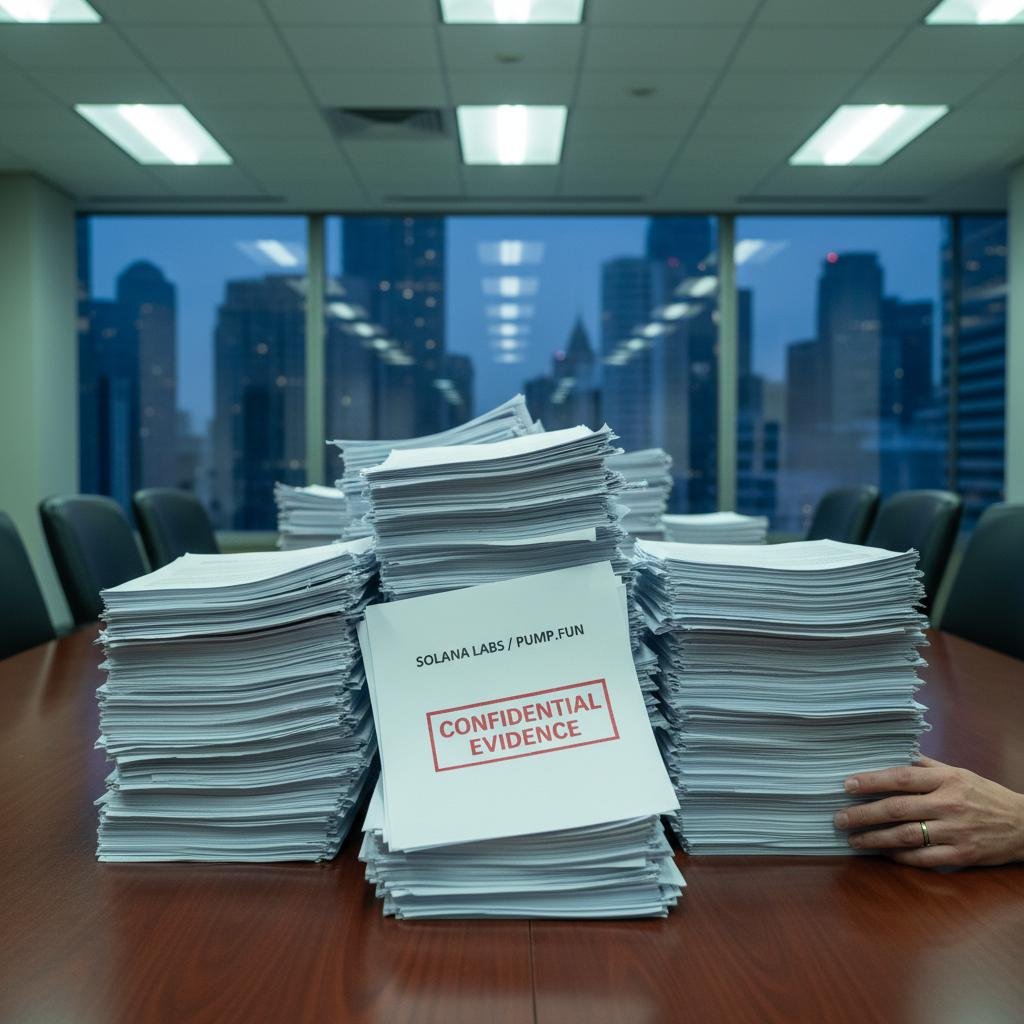
Earlier this year, a group of fed-up memecoin investors, led by Michael Okafor, dragged executives from Solana Labs, the Solana Foundation, Jito Labs, the Jito Foundation, and Pump.fun into court. Their claim? A coordinated effort to turn the vibrant, often chaotic, memecoin market into their personal ATM. The defendants, as you’d expect, cried foul, attempting to get the whole thing tossed. But before Judge Colleen McMahon could rule, Okafor’s legal team dropped a grenade: a trove of internal communications that, they claim, prove everything.
Max Burwick, one of Okafor’s attorneys, told the judge that an initial peek at these logs, handed over by a confidential informant, revealed “multiple direct communications.” We’re talking engineers from Solana Labs and Pump.fun allegedly chatting about “integration of key software components” – the kind of backroom talk that smells less like innovation and more like orchestration. On December 11, the judge gave Okafor the green light to amend the lawsuit, stuffing it full of this spicy new intel. They’ve got until January 7 to file it. Game on.
The “Rigged Slot Machine” Allegation: How It Allegedly Worked
The lawsuit paints a grim picture for anyone who ever YOLO’d into a fresh memecoin on Pump.fun. It wasn’t a fair shot, they argue, but a “coordinated racketeering enterprise.” Think of Solana as the sprawling casino, Pump.fun as the shiny slot machine, and Jito-created software as the hidden mechanism guaranteeing the house (and its alleged co-conspirators) always wins.
Pump.fun famously markets itself on “fair launch” principles: “no presales,” “no insider allocations,” “rug-pull proof launches.” Sounds great, right? A level playing field for everyone. But the lawsuit claims this was all smoke and mirrors. Behind the curtain, Pump.fun’s own tutorials and guides allegedly *encouraged* memecoin creators to use Jito software. Why? To buy a massive chunk of their own tokens *before* anyone else could get in. This wasn’t just about getting a head start; it was about guaranteeing profit, leaving retail investors holding the bag of “catastrophic losses.”
Imagine showing up to a slot machine, seeing a single static screen, and pulling the handle. You think you’ve got a chance. But, as the lawsuit alleges, “insiders used superior infrastructure to pull the [slot machine] handle first, every time.” This isn’t just about speed; it’s about a fundamentally unequal system. Jito’s role here is critical: its software purportedly allowed certain traders to jump the transaction queue by paying “tips,” essentially allowing them to front-run everyone else. This isn’t just a technical advantage; it’s a structural one, baked into the very fabric of the alleged “fair launch” system.
Why Would a “Rigged System” Be Good for Pump.fun?
Here’s where it gets interesting. On the surface, you’d think a platform designed to rip off its users would quickly run out of users. The lawsuit itself admits that an estimated 60% of retail investors on Pump.fun lost money – potentially to the tune of $4 billion combined. That’s a staggering figure. So why would Pump.fun, or Solana for that matter, enable such a system?
The cynical answer, and what the lawsuit alleges, is simple: fees. “Fees accrued whether a token succeeded or failed,” the filing states. This means as long as people kept trading, kept getting lured by the promise of the next moonshot, the platform and its associates kept raking in cash. While creator profits might spur new memecoin creation, the lawsuit implies that the churn of new tokens and the sheer volume of transactions were more valuable than a sustainable, fair ecosystem for all users. The goal wasn’t necessarily to keep every retail investor happy, but to keep the casino doors open and the money flowing, regardless of who ended up with empty pockets.
And let’s not forget the broader ecosystem. Pump.fun, for all its alleged flaws, ignited a memecoin frenzy. That frenzy generated massive transaction volume, much of which flowed through Jito’s software and, ultimately, across the Solana blockchain. This activity, the lawsuit argues, directly boosted the value of SOL, Solana’s native cryptocurrency, thereby enriching Solana Labs, the Solana Foundation, and their executives. It’s a classic alleged “heads I win, tails you lose” scenario, where “defendants engineered a system in which they were always guaranteed to win.”
The Defense Strikes Back: “Non-Actionable Puffery”
Before the bombshell messages dropped, the defendants weren’t exactly sitting idly by. Last September, Solana Foundation, Jito Labs, and Pump.fun collectively asked Judge McMahon to dismiss the case. Their argument? Disgruntled investors blaming others for bad trades. They claimed the lawsuit lacked specificity, failing to provide concrete examples of the alleged rigged system. Pump.fun, for instance, countered that its “vague assurances of fairness and safety are, at most, ‘non-actionable puffery.’” Essentially, they argued, “we said it was fair, but that doesn’t mean we promised you’d make money, or that we couldn’t operate within the rules.”
Jito, for its part, asserted that its technology was developed long before Pump.fun even existed and was openly available to anyone. They likened the plaintiff’s theory of liability to “holding a manufacturer of high-speed modems liable for the conduct of third parties on the internet.” Fair point, if their technology was truly neutral and not specifically integrated into a scheme. Notably, Jito Labs, the Jito Foundation, and their executives were dropped from the lawsuit in September – a significant win for them, at least initially. The defendants also highlighted the lack of concrete proof of a conspiracy, pointing out that shared investors between Jito Labs and Solana Labs didn’t automatically imply an overarching scheme.
Beyond the Courtroom: Threats and the Future of DeFi
This isn’t just a dry legal skirmish; it’s turned ugly. Max Burwick, the plaintiffs’ attorney, revealed on X (formerly Twitter) that he’s facing “threats of rape and murder” for representing his clients. This grim development underscores the high stakes and raw emotions swirling around these allegations. Burwick, a lawyer known for his theatrical flair, vowed that such threats “will not stop us from fulfilling our ethical duties as attorneys or from continuing our work to bring accountability and help build a better crypto industry.” It’s a stark reminder that behind the code and the price charts, real people and real money are involved, often with incredibly high tensions.
The lawsuit seeks more than just compensation. The lawyers are pushing for extraordinary orders: placing the companies in receivership, shutting them down unless they acquire gambling and money transmitter licenses, and forcing them to implement customer background checks and anti-money laundering procedures. They also demand that the companies and executives cough up “all ill-gotten gains,” including any appreciation in SOL directly tied to their alleged scheme.
This legal battle is a critical moment for the broader crypto market, especially for the Solana ecosystem and the DeFi space at large. If the plaintiffs succeed, it could set a powerful precedent for accountability in what many perceive as the Wild West of decentralized finance. It forces a hard look at the promises of “fair launch” versus the realities of technical advantages and opaque systems. For crypto traders and Web3 enthusiasts, it’s a stark reminder that even in a supposedly decentralized world, the fight for a truly level playing field is far from over. This isn’t just about a few bad actors; it’s about the integrity of the market itself, and whether “decentralized” truly means “fair and open for all.”